Mon–Sat · 10:00 AM–2:00 PM & 5:00 PM–9:00 PM
Near Naranpura Railway Crossing, Ahmedabad

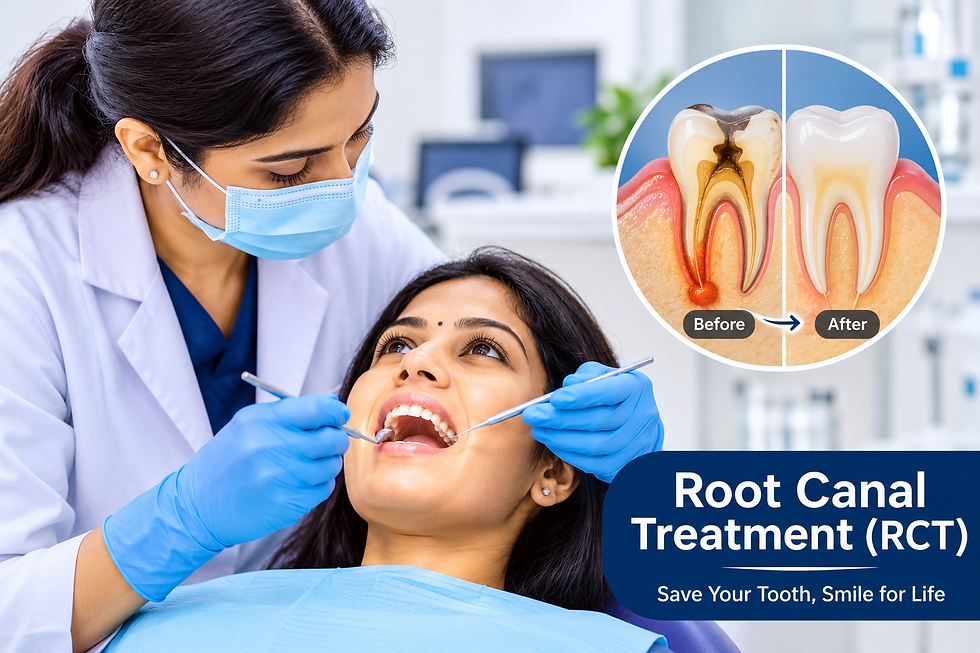
Root Canal Treatment (RCT)
Restore infected teeth with effective root canal treatment. Our gentle procedure relieves pain, removes infection, and helps preserve your natural tooth.
Signs You May Need a Root Canal
Persistent toothache
Sensitivity to hot or cold foods and drinks
Pain while chewing or biting
Swollen or tender gums around a tooth
Tooth discoloration
Pimple-like swelling on the gums
What Happens During the Procedure?
1. The tooth is numbed for your comfort.
2. The infected tissue is removed from inside the tooth.
3. The root canals are cleaned and disinfected.
4. The canals are sealed to prevent reinfection.
5. A crown may be recommended to strengthen and protect the tooth.
Benefits of Root Canal Treatment
Relieves pain and discomfort
Eliminates infection
Saves your natural tooth
Restores normal chewing function
Prevents the need for extraction
Is It Painful?
Modern root canal treatment is virtually painless and is often no more uncomfortable than getting a dental filling. Most patients experience immediate relief from the pain caused by infection.
At Dr. Ronak's Multispeciality Dental Clinic & Implant Centre, we use advanced techniques and modern technology to provide comfortable, precise, and effective root canal treatments, helping you preserve your natural smile for years to come.
Root Canal Aftercare
After Your Appointment
Avoid eating until the numbness wears off completely.
Mild discomfort or sensitivity for a few days is normal and can usually be managed with prescribed medications.
Avoid chewing on the treated tooth until the final filling or crown is placed.
Oral Care Instructions
Continue brushing and flossing normally, being gentle around the treated area.
Maintain good oral hygiene to prevent future dental problems.
Rinse as directed by your dentist if prescribed.
Food Recommendations
Choose soft foods such as yogurt, khichdi, rice, soup, pasta, or smoothies for the first day.
Avoid hard, sticky, or crunchy foods that may damage the temporary restoration.
When to Contact Your Dentist
Severe pain that does not improve
Significant swelling
A broken temporary filling or crown
Difficulty biting or chewing
Signs of infection such as pus discharge or fever
Don't Skip the Final Crown
In many cases, a dental crown is recommended after root canal treatment to protect the tooth from fracture and restore full function. Timely placement of the crown is essential for long-term success.
With proper care and regular dental check-ups, a root canal-treated tooth can last for many years and function just like a natural tooth